South African businesses rely on plastic components every day – from agricultural and irrigation equipment to mining, industrial, food-service and consumer products.
When these components need to be manufactured accurately, consistently and at scale, plastic injection moulding is one of the most effective manufacturing processes available.
At Proto Lab SA, we provide injection moulding and plastic manufacturing solutions for businesses requiring reliable, locally manufactured plastic products and components.
Whether you need an existing plastic product manufactured, a custom component produced or a manufacturing partner capable of supporting ongoing production requirements, injection moulding provides a scalable solution for producing consistent plastic parts.
What Is Plastic Injection Moulding?
Plastic injection moulding is a manufacturing process used to produce plastic components by injecting heated plastic material into a specially designed mould.
The plastic material is heated until it can flow into the mould cavity. Once injected, the material cools and takes the shape of the mould. The finished component is then removed and the process can be repeated.
This makes injection moulding particularly suitable for businesses that need to manufacture the same plastic component repeatedly and consistently. It is used to manufacture everything from small precision components to larger plastic products. Depending on the product design, material, tooling and machinery required.
How Does Injection Moulding Work?
1. Product or Component Design – The process begins with understanding the product that needs to be manufactured. Factors such as dimensions, intended application, strength requirements, operating environment and production volumes are considered.
2. Material Selection – The appropriate plastic material is selected according to the finished product’s requirements. Different polymers offer different levels of strength, flexibility, rigidity, chemical resistance, impact resistance, temperature resistance and durability.
3. Mould and Tooling – A mould contains the cavity that creates the shape and features of the finished plastic product. Accurate tooling affects the dimensions, appearance, consistency and repeatability of the finished component.
4. Injection – Plastic material is heated and injected into the mould under controlled conditions.
5. Cooling – The plastic is allowed to cool and solidify inside the mould.
6. Ejection – Once sufficiently cooled, the component is removed from the mould and the manufacturing cycle can begin again.
What Are the Advantages of Plastic Injection Moulding?
Consistent Production – Once the mould and manufacturing process are established correctly, injection moulding can produce highly consistent components across repeated production runs.
Suitable for High-Volume Manufacturing – Although the initial tooling investment needs to be considered, injection moulding can become increasingly cost-effective when larger quantities of the same component are required.
Complex Product Designs – Injection moulding can produce components with detailed shapes, curves, ribs, openings and other features.
Wide Range of Plastic Materials – Different thermoplastic materials can be selected according to the required application.
Repeatability – Once a product and mould have been established, businesses can place repeat production orders without redesigning the component each time.
Reduced Secondary Manufacturing – Depending on the design, multiple features can often be incorporated into a single moulded component.
Custom Injection Moulding in South Africa
Not every plastic product can be purchased off the shelf. Industrial equipment manufacturers, agricultural suppliers, mining-related businesses, wholesalers and product developers frequently require components designed for a particular application.
Custom injection moulding allows businesses to manufacture plastic products according to specific dimensions, designs and functional requirements.
Examples include plastic fittings, caps and closures, housings, protective components, industrial plastic components, agricultural and irrigation components. Plasticware, product accessories, plastic containers, specialised replacement components and custom-designed plastic products.
Injection Moulding for Agriculture and Irrigation
Agriculture is one of the many industries where durable plastic components are widely used. Plastic components can form part of irrigation, water-distribution and agricultural systems. Suitable polymers can provide properties such as corrosion resistance, low weight and durability.
Proto Lab SA’s broader manufacturing offering includes solutions for the agricultural, farming and irrigation sectors, including plastic and piping-related products. Businesses requiring custom plastic components for agricultural applications can discuss their requirements with our manufacturing team.
Plastic Manufacturing for Mining and Industrial Applications
Mining and industrial environments often require components capable of operating under demanding conditions. Depending on the application, plastic materials can provide advantages including chemical resistance, corrosion resistance, reduced weight and durability.
Proto Lab SA works with businesses supplying and operating within industrial and mining-related markets and can assess manufacturing requirements on a project-by-project basis.
Injection Moulding for Commercial and Consumer Plastic Products
Injection moulding is also widely suited to the manufacture of commercial and everyday plastic products.
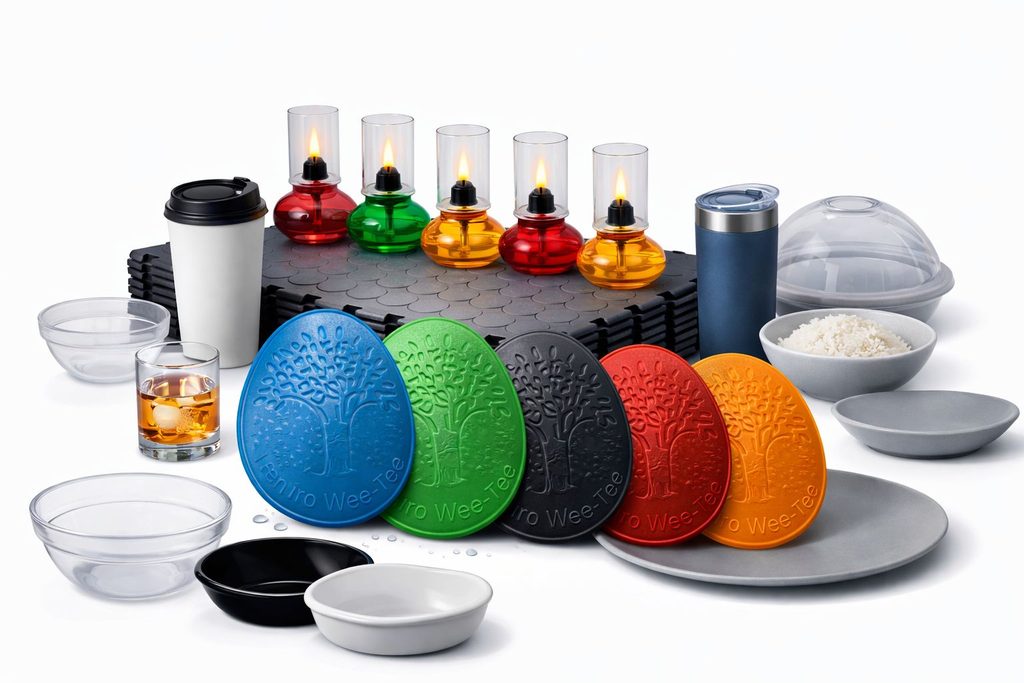
Proto Lab SA manufactures a variety of plastic products and components. Including plastic cups, plastic plates, plastic bowls, soy sauce bowls, plastic golf tees, oil lamps, plastic components and accessories, and more!
Can Proto Lab Manufacture a Custom Plastic Product?
If you have an idea, sample, existing component or requirement for a plastic product, speak to us!
Important considerations include product design, dimensions, application, material requirements, quantity and tooling. Providing this information allows a manufacturer to assess the most appropriate production approach.
What Plastic Materials Can Be Injection Moulded?
Common materials within the broader injection moulding industry include Polypropylene (PP), Polyethylene (PE), High-Density Polyethylene (HDPE) and Low-Density Polyethylene (LDPE). Also others such as Acrylonitrile Butadiene Styrene (ABS), Nylon, Polycarbonate (PC) and other specialised thermoplastic materials.
Material selection should be based on factors such as strength, flexibility, chemical exposure, operating temperature and UV exposure.
Why Choose a South African Injection Moulding Manufacturer?
Working with a local South African plastic manufacturer can simplify communication, product development, production planning and logistics compared with managing an overseas supply chain.
For South African businesses requiring repeat supplies of plastic components, establishing a relationship with a local manufacturer can create a more responsive supply chain.
What Industries Use Injection Moulding?
Plastic injection moulding can support agriculture, irrigation, farming, mining, industrial manufacturing, engineering and construction. Additionally, hospitality, food service, retail, packaging, consumer products, automotive-related manufacturing and product development.
How Much Does Plastic Injection Moulding Cost in South Africa?
There is no single price for injection moulding because every project is different. Cost can depend on product dimensions, component complexity, plastic material, mould and tooling requirements, production quantity and manufacturing cycle.
Tooling can represent a significant initial investment. However, when the same product is manufactured repeatedly or in larger quantities, injection moulding can offer attractive per-unit manufacturing economics.
What Information Should I Send an Injection Moulding Manufacturer?
When requesting a quotation, provide photographs, drawings or CAD files, dimensions, an existing sample, required material or material characteristics. Additionally, the intended application, estimated quantity, expected ongoing order volume, colour requirements and important technical specifications where available.
Looking for an Injection Moulding Company in South Africa?
Whether you require an existing plastic component, repeat production or a new custom-manufactured product, choosing the right injection moulding partner is an important part of building a reliable supply chain.
Proto Lab SA provides plastic injection moulding and manufacturing solutions for businesses across South Africa, with products and manufacturing capabilities serving agricultural, irrigation, mining, industrial, commercial and consumer markets.
If you’re looking for a plastic injection moulding manufacturer in South Africa, contact Proto Lab SA to discuss your product, quantities and manufacturing requirements.